Showing posts with label Albania. Show all posts

Thursday, January 23, 2025

ALBANIA 2025

The Albanian act and song was chosen on 22th December through the 63rd edition of their annual song contest "Festivali i Këngës". Like last year, the jury awarded the festival's main awards, however the selection of their Eurovision representative was made through a combination of jury and televoting. Going to Basel will be the duo Shkodra Elektronike with the song "Zjerm" (Fire)

Shkodra Elektronike consists of singer-songwriter Beatriçe Gjergji and songwriter-producer Kolë Laca who now live and work in Italy. The duo's name harks to Shkodër - a city in northern-Albania where both members grew up. The 'elektronike' refers to their passion of creating, re-interpreting or interpolating folk songs and melodies with modern instruments and technologies. Their first songs were only released during 2020 and, after competing against some of Albania's most famous and established act, were therefore seen as a shock winner of the festival.

The song is a mid tempo dance number written in the northern dialect of Gheg Albanian. It is mainly constructed of three parts; an initial verse and chorus sung by Beatriçe, a spoken word part lead by Kolë and finishing with more chorus from Beatriçe including added improvisation to create a crescendo. The juxtaposition between Beatriçe's strong visual and vocal identity against Kolë rather monotone, melancholic vocal and his plain styling makes this show very intriguing. The beat and folksy earworm which weaves in and out behind the tune is extremely infectious. This, coupled with Beatriçe's voguing during the instrumental, makes the whole song and performance engaging and memorable. The way the song starts and ends with the ethnic earworm grounds the song from start to finish.

The song, although an early release on the 2025 timetable, has already become a firm fan favourite. The simplistic staging of the song and performance gives them a bedrock of sincerity that is evident whether or not you understand their words. In fact, the words call for peace, harmony and hope on both a personal and planetary basis. Furthermore this not only speaks against the state of politics worldwide but also calls on the not so distant past of Albania itself. The only additional comment/questions I have about the future interpolations of the song is whether the duo will change anything based on their FiK performance. The visual show is simple but effective and I hope its essence is kept. Personally, the addition of the orchestra added extra qualities to the track, as did the live call-and-response backing vocals in the verses.


ARTIST - Shkodra Elektronike
SONG - Zjerm
WRITING/PRODUCTION CREDITS - Beatriçe Gjergji, Kolë Laca

Tuesday, January 16, 2024

ALBANIA 2024

The Albanian act and song was announced on December 22nd 2023 at the conclusion of the 62th  "Festivali i Këngës". Although the winner of the festival was decided by the in-house jury, a separate phone vote was responsible for the act and song sent to Eurovision. Going to Malmö is Besa Kokëdhima with the song "Zemrën n'dorë" (Heart in hand)

Although born in the Albanian city of Fier, Besa spent some of her teen years in the United Kingdom. She released her first song in 2003 - a collaboration with the band Produkt 28 - and her debut self-titled album was released in 2006. As well as participating in many of the song festivals in Albania and the Balkans, Besa became a mentor on The Voice of Albania in 2016. In 2022, Besa released a song in French "En Equilibre" with a French language album potentially in the pipeline. This is not her first foray at Eurovision as Besa appeared in the 2009 edition of Selecţia Naţională in Romania reaching the semi-finals.

This composition is wholly in Albanian, had live accompaniment from the orchestra and extra vocal support from the off stage backing singers. The visual background had a fairy tale/space theme that doesn't 100% concur with the lyrics but does fit a loose lost and found narrative therein. Besa is alone on stage and is engaging to watch. This is a mid-tempo catchy pop song with some r&b qualities. Besa’s voice sounds very strong and clear throughout. The structure of the song is a little predictable at first but the staccato rhythms of the second verse keeps you on your toes. There is however a lot of dead air/long bridges which could be cut down or utilised more effectively. In particular the chorus has a great tune and is really very memorable. Repeating this more would be of benefit to the listener than instrumental breaks.

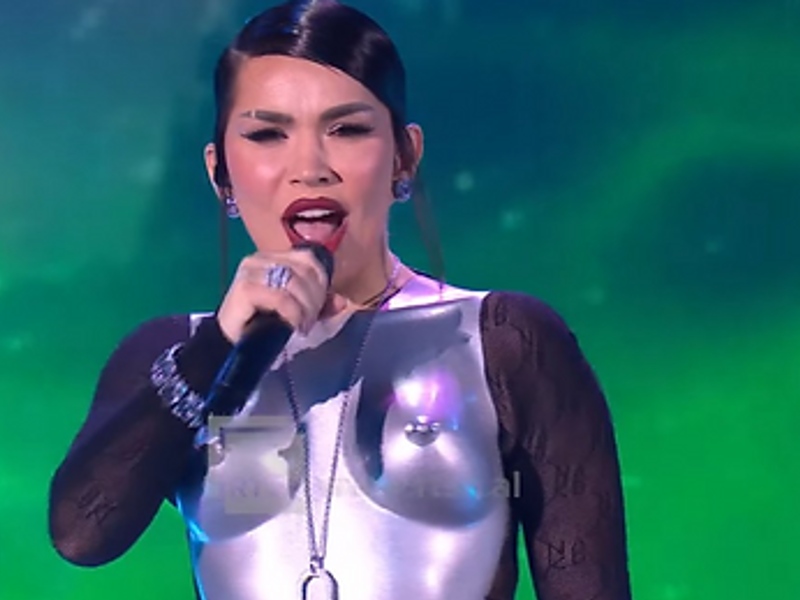
Besa performed her song twice during the festival - once in the semi final and once in the final. Her attire was extremely different both times and both memorable for very different reasons. Personally I liked the semi final outfit better as this really made a statement on stage. I liked the slicked back hair and the silver breastplate - one might even say this was a sexier take on Blanca Paloma last year. In terms of performance style, I feel Besa will need to connect much more down the camera and possibly not slip up on her dress during the performance! I don’t think this needs any more people on stage, apart from maybe some backing singers at the side. There has been some talk about a language change on the song as there is an English/Albanian demo of this song. Personally I feel like the song works as it is. Dual language versions can sometimes feel shoo-ed in and, as languages do not always structure the same, the tunes and hooks are lessened.


ARTIST - Besa
SONG - Zemrën n'dorë
WRITING/PRODUCTION CREDITS - Kledi Bahiti, Besa Kokëdhima, Rozana Radi


Thursday, January 12, 2023

ALBANIA 2023

The Albanian final "Festivali i Këngës" was held on December 22nd at the Palace of Congress in Tirana, hosted by Arbana Osmani. In the days before the final there were two semi-finals which whittled down the field of 26 to 21. In a change to previous editions, although the winner of the festival was determined by the jury vote, the act going to Eurovision would be chosen solely by the SMS voting during the show. Going to Liverpool will be Albina and Familja Kelmendi with the song "Duje"(To Love)

Albina Kelmendi was born in Kosovo and performed with her family from a young ages and came to prominence during the 2014 edition of The Voice Albania where she was the runner up. She has released many songs as had collaborated with numerous Albanian artists over the years but it was only until 2022 when she released her first solo album. It was then announced that Albina, backed by five of her family members, would be participating in Festivali i Këngës

The song begins with Albina centre stage dressed in a black cloak and starts with what seems like a good 30 seconds of familial Albanian wailing. Underneath this the guitar starts revving up and the song finally starts proper. The drum beat keeps the song going through the verse which doesn't really go anywhere. However, the songs changes as the two older members of the family, dressed in white, start on the chorus - a much more memorable part of the song. There is then a brief instrumental accompanied by some simplistic shimmying before another rendition of the verse. We then have an elongated final chorus with Albina becoming very impassioned and finishing the song knelt down on the floor.

This entry caters very well for the home-based FiK audience but as an outsider this song is rather impenetrable. For me, the song only gets going during the repetition of the chorus and that is far too late. The song is on the cusp of the 3 minute mark - rather short compared to many entries chosen from FiK -  so this bodes well for a sympathetic glow up. It needs a clearer direction musically although the use of the orchestra during the festival can give songs a different sound compared to the studio version. It also needs to be much more striking visually with more made of the family aspect of the act and the song, Many of the other members on stage looked scared and unsure on stage and maybe more definite staging would help e.g. the hand movement during the chorus really makes the group look and feel like a cohesive unit. It has already been confirmed the song will stay in Albanian which is a smart move. This song has hints of promise but right now lacks clear direction and personality. 
For me this song is all about that chorus. Shorten the warbling at the start and make the second verse shorter, there might be more space to add more parts of the chorus and make a bigger feature at the end. Unfortunately Albania has a habit of ruining its Eurovision songs either in the revamp/shortening process or by making the stage show more complicated. This song is currently too muddled and takes too many listens to become familiar enough to remember. That all said, there is something charming and lovely about a family performing together. I hope it can be pulled together to make something more notable.


ARTIST - Albina and Familja Kelmendi
SONG - Duje (To Love)
WRITING/PRODUCTION CREDITS - Enis Mullaj, Eriona Rushiti


Monday, January 24, 2022

ALBANIA 2022

The Albanian Final was held on December 29th at the Palace of Congress in Tirana, hosted by Jonida Maliqi, Isli Islami, Xhemi Shehu & Kelvi Kadilli. Before the final of Festivali i Këngës there was a semi-final where 3 of the newcomers were selected to continue on in the competition. The winner, chosen by a jury, was Ronela Hajati with the song "Sekret" (Secret)

Ronela has been an active performer, entering singing and dancing competitions, since she was a child. She scored her first charting single in 2016 and has been almost ever present in the charts since then. As well as a performer she has penned many of her own songs and has written for last year's Albanian representative Anxela Peristeri. Ronela's music is generally in the pop genre but her singing and performance style is extremely varied with influences of R'n'B, Latin, Balkan music and even reggae. 

The song starts with what turns out to be a slower and elaborate choral interpretation of the chorus tagline which is then repeated by the backing singers. After 30 seconds the ethnic bassy rhythms come out and the song starts proper. The monotone verse is followed by the melodic chorus which breaks down to a chanted part with a lengthy instrumental and accompanying dance routine. There is then another verse (but bares little or no relation to the first) followed by another chorus and outro dance routine. The song ends with another earwormy outro to the end. This performance is about attitude and feeling more than tune and melody.

Let's get some elephants out of the room straight way. Firstly the song is about 35 seconds over the Eurovision time limit although this is not unknown for competing FiK or Sanremo entries. But as many good songs have been butchered by bad editing as the amount that have been dealt with sympathetically. The edit may be tricky as the song needs to keep its repetition but also leave the instrumental breaks as not to lessen the dance sections. Secondly, the choir of backing vocalists and live orchestra gives the performance a real live feeling and, when the re-recorded version is made, it will be interesting to see if the same kind of magic can be conjured up. Finally, there are way more than 6 people on the stage. The delegation may decide to pare down this staging and keep the overall aesthetic - possibly utilising any LED screens - or they may start again from scratch. 
With all this to take into account it is rather hard to say how this will go down. However, this was the hot fan favourite before the show began and it is easy to see why. Ronela's voice is shown off perfectly using every single part of her diverse range. The repetitive rhythm and lyrics, albeit mostly in Albanian, is very catchy and even the odd English line did not sound out of place. The on pointe dance routine is striking and copyable. The identical black outfits for the dancers makes them a cohesive unit with Ronela as their captain. My main worry is that the song does feel like a collection of parts and the lack of an extra chorus - or even another verse - at the very end of the song might lessen the impact made at the very start.


ARTIST - Ronela Hajati
SONG - Sekret (Secret)
WRITING/PRODUCTION CREDITS - Ronela Hajati, Marko Polo


Saturday, January 23, 2021

ALBANIA 2021

The Albanian Final (Festivali i Këngës) was held on December 23rd at Sheshi Italia in Tirana, hosted by Blendi Salaj & Jonida Vokshi. Before the final there was a semi-final where the long list of 25 was reduced to 18. The winner was chosen solely by a jury. The winning song was "Karma" sung by Anxhela Peristeri.

Anxhela is centre stage for most of the performance wearing a sparkly beige/coral number consisting of long sleeves, pronounced shoulders and a shredded skirt. The top half looks good in close up but the bottom could be a little more imaginative. Her dancers are wearing gold and black catsuits with matching bandana and capes which seems rather incongruous with Anxhela's outfit AND the theme of the song. The stage colouring seems to mix red and blue with a number of different motifs but none are prominent.

The song starts with a rock-guitar led call to action with Anxela blasting loud and clear like a fog horn followed by a guitar riff but soon settles down into something much more mellow. The first verse is very sparse and punctuates the syllables and expression in Anxela's voice. It seamlessly goes into the chorus which has the warbly earworm from the introduction but uses a softer tone to her voice. This leads to a brief instrumental mirroring the tune of the chorus and four dancers crawl onto the stage next to her. From here the song gets a little less static and more powerful.
During the second verse/chorus combination the background music is more pronounced and more instruments join in. Anxhela is also engaging more with the camera; swaying and bending to the music. As the song enters its final minute there is another instrumental this one much more drum based and has the backing singers chanting away on top. During this part Anxhela is tossed and turned between the backing singers before being lifted above their heads. This gives Anxhela enough time to do one more rendition of the chorus before the song finishes rather abruptly.

Positively, there are very few occasions that a song with wins the Albanian national final is exactly the right length to go to Eurovision, so this means we don't have to worry about parts being cut out or awkwardly phrased. We also know that the song is being kept in Albanian, which I think is a good move. The ethnic instrumentation may have felt jarring with English lyrics on top so keeping it as it is will keep it feeling natural. Some tweaks will need to be made to the stage show depending on the different options of how Eurovision will be presented this year. I think work needs to be done on all of the outfits - especially the backing dancers!

This is quite expected Festivali i Këngës fayre and is not a bad bar to judge the rest of the Eurovision entries to come. Personally, although the tune (particularly the chorus) is memorable there is a lack of flow. The tempo is a little safe and predictable and I would almost be tempted to experiment with trying the song out a tad quicker or slower to see if it changes the emphasis of the song and maybe give more direction for the staging and dancers. That all said and done, knowing that they don't really need to do much to the song in essence, just wait for the devamp....


ARTIST - Anxhela Peristeri
SONG - Karma
WRITING CREDITS - Kledi Bahiti, Olti Curri


Friday, December 30, 2011

29/12/11 ALBANIA

The
The Albanian Final was held on December 29th at the Palace of Congress in Tirana, hosted by Nik Xhelilaj, Enkeleida Zeko & Hygerta Sako.

The Albanian entry was chosen via the long running “Festivali i Këngës” which was celebrating its 50th edition. Before the final there were 2 semi finals on the 26/27th December where the initial set of 28 was whittled down to a final of 20. The winner ,as ever, was chosen by a jury and in Eurovision style each member awarded 1,2,3,4,5,6,7,8,10 and 12 points to their preferred entries. This part was quite funny because the presenters were going much too fast for the poor bloke trying to input the scores into the computer which almost brought the graphics to a stand still. By the end I think it was very close to breaking down! However there was a clear winner.

The winning song was “Suus” – meaning Personal – sung by Kosovo-Albanian, Rona Nishliu. Born and raised in the former Yugoslavia (now present day Kosovo) she moved to Prishtina when she was 13. In 2005 she entered the Albanian Idol competition placing in the top 5. She is very striking with her very large eyes (even larger mouth) and her long flowing dreadlocks.
Before I start there are some provisos to my analysis of the winning song. Firstly, the Albanian preselection involves an orchestra. Its addition does gives every song a lot of backbone, atmosphere and extra oooomph, something that won’t be there at Eurovision. Secondly the song is over 4 minutes long and I certainly would not like the job on abridging it down to 3. Thirdly, the song is in Albanian and as of writing I don’t really know what the song is about or what it means, which doesn’t help.

The song starts off as a quiet piano based ballad which then starts to get quite jazz-influenced in places. It is not exactly the most merry of songs and doesn’t really have a sing-along-able tune or hook to catch you and interact with. The song takes quite a while to get warmed up and build to the peaks in the chorus. The chorus however is quite extraordinary. The orchestration really builds and changes to unexpected chord sequences while Rona shouts, screams, yodels and yelps over it like Mary Margaret O'Hara on “November Spawned A Monster” by Morrissey. The instrumental part in the middle is also wonderful to listen to and has an almost military sound to it. Rona is a very inward performer, a bit like Max for Germany back in 2004 and the song also does not give a lot of scope for audience interaction. It is a very memorable song, but possibly not for reasons you would like a song to be remembered.

It is quite hard to give a full and round opinion because so many things about the song have to change. I would be quite shocked if the language of the song was to change. It would be hard, if not impossible, to set English lyrics to such a complicated melody and keep the mood of the song. We will just have to see over the coming months what changes are made and make a judgement then.

As ever, Albania are going to send a very interesting song to Eurovision and I can confidently predict there will be nothing else quite like this one when we get to Baku in May !


SONG  - Suus (Personal)
ARTIST - Rona Nishliu
COMPOSER - Florent Boshnjaku
LYRICIST - Rona Nishliu
LANGUAGE – Albanian (title is in Latin)


kjf

Monday, March 14, 2011

UPDATE 4

Lots of official videos have been released this week.

GEORGIA – As revealed in and earlier update, Eldrine have a new lead singer, Sopho Toroshelidze. They have finally finished the new version of “One More Day” and the new song can beard in their brand new video clip below.


ITALY – the official video clip for the Italian Eurovision entry has been released. As well as showing Raphael and his trumpeter, it also shows inserts of a film. The song is slightly different to the one Raphael sang at San Remo it has been re-written with a few more lines in English, but is also still a bit too long.


FINLAND –We have not heard much from the Finnish entry since it was chosen back in January, however Paradise Oskar has released his official video clip. The video tries to focus on the environmental message of “Da Da Dam” as well as focusing on the artist.


UK – Just 2 days after the song “I can” was premiered on the BBC, Blue have released their pop video. The song is centred around the skyline of London, possibly with some very subconscious references to the upcoming Olympics. 2012 could be a very British year !


ROMANIA – It was way back on New Year Eve when Hotel FM was announced as the Romanian entry. They group has been doing a lot of promotion (as well as being involved in a minor sex scandal!) but they have finally released their promotional clip for the song “Change”. Like last years video, a lot of video trickery is used as well as being a ‘Visit Romania’ showcase!


ALBANIA – It was further back in December when Aurela Gace was voted as the Albanian winner for the ticket to Germany. However it was announced that an English version would be presented at the contest. The preview clip of the new song “Feel the Passion” has been released. The video shows lots of views of Albania whilst Aurelia, in a very strange dress flies about. Note also that the clip is still way over 3mins.


CROATIA – As suggested on the previous update, Daria’s song has had a total overhaul. “Lahor” was changed to “Break a leg” and that English version has been re-written to make the finalised entry “Celebrate” The track has been available for a while but the promo video has just been released. The clip has a party atmosphere as well as lots of costume changes.

Sunday, December 26, 2010

ALBANIA

Christmas Day saw the final of the "Festivali i Këngës 2010" heldat at the Palace of Congress in Tirana, which saw the second entry of Eurovision 2011 chosen.

Aurela Gaçe won the festival with her song "Kënga ime" (My Song). It is very likely that the song will eventually be re-scored and re-written into English. The song is a mid-tempo song, where the verses are sang slowly and lightly and chorus is sung at a faster cadence with more power. The song has a very Middle Eastern feel to it and one might be forgiven by listening to the intro that you were hearing the Turkish entry. The first verse of the song certainly seems dark and mysterious, it starts to build at the bridge and leads into an explosive chorus which brings out it's rockier tones. The second verse is a little more rockier and the chorus definately has its hooks in the melody and instruments in the backing track.

I do however have some reservations about the song. The chorus to me is a bit shouty, a bit strained and can sound a little bit forced at times. I can imagine on a bad day this could sound very screechy and even off key. The song does have a middle eastern feel and although this may appeal to the eastern european countries, this kind 'arabian ballad' may not have reaching appeal.

Also Aurela has a very strange bowl head haircut going on and her dressmaker obviously thought she had very long arms...

I will be very intersted to know if this will be translated as this may affect the appeal of the song. So - not bad, but with some reservations.


SINGER - Aurela Gaçe
SONG - Kënga ime (My Song)
MUSIC- Shpëtim Saraçi
WORDS - Sokol Marsi